


Gold Regains $1,800 On Inflation Fears. What’s Next?
FXOpen

Gold has spent the year consolidating. But, curiously enough for market participants, all this time, inflation has been on the rise in the advanced economies all this time.
Most recently, inflation reached levels not seen in decades, running hot in the United States and Europe, two regions where central banks have a hard time generating inflation according to their price stability mandate. But despite the ongoing rise in the prices of goods and services, gold, a traditional hedge against inflation, is powerless. Just the opposite, one may say: it has traded with a bearish tone all year. However, it found important support in the $1,680 area where buyers stepped in.
Last month, gold gained +1.5%, but still ended October down by a little over -6%. Gold equities rallied last month, up by more than +7%, and yet, for the year, they are down close to -12%.
One explanation for gold-related equities and gold’s poor performance is the US dollar index. By the end of October, the dollar index was up by +4.65% on the year, putting pressure on the price of gold.
This is another oddity because the dollar gained while inflation rose, and typically things work the other way around. What will the rest of the trading year bring for gold?
Technical Picture Remains Bullish
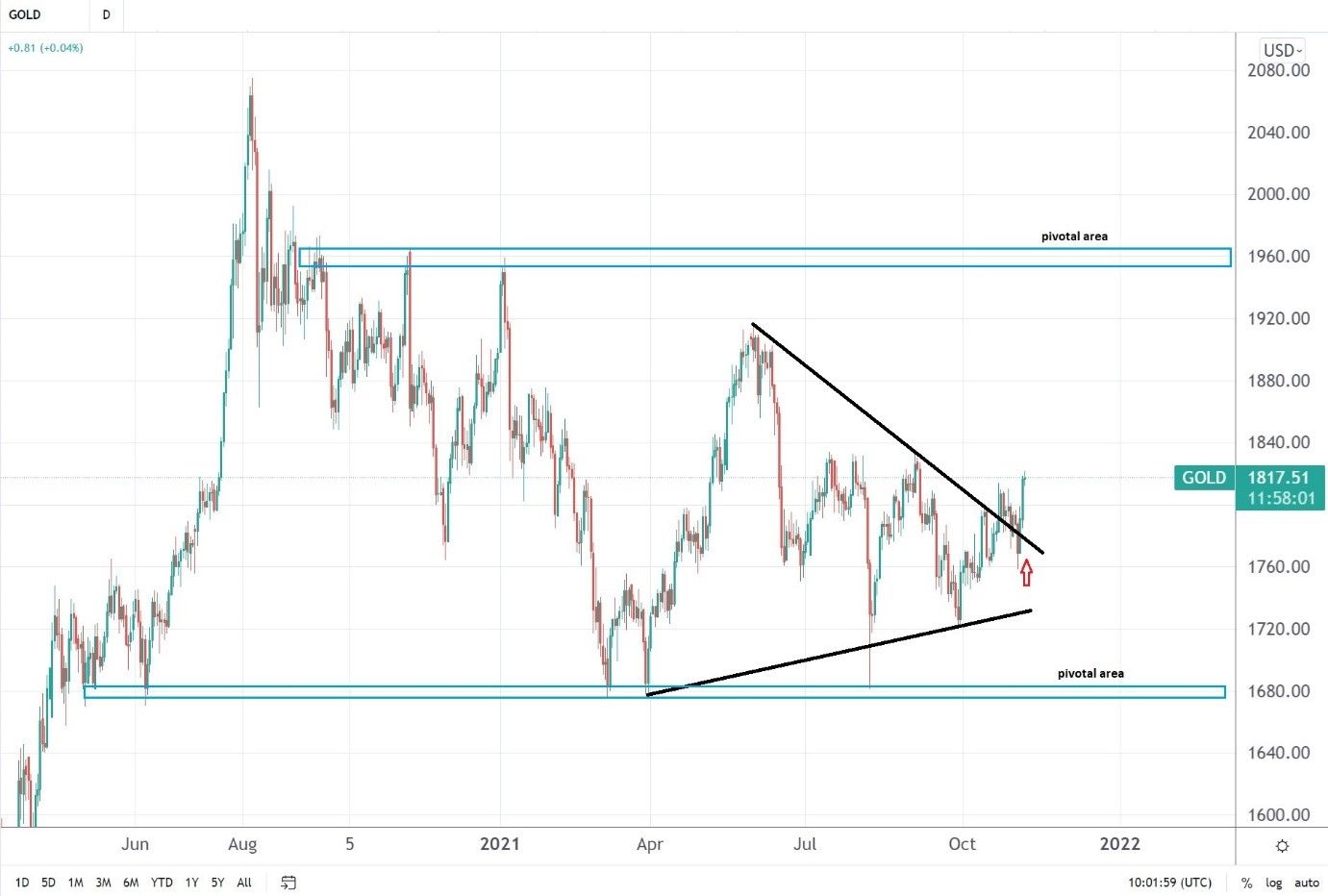
From a technical analysis perspective, the price of gold remains bullish. Two pivotal areas should be mentioned here.
On the one hand, in 2021, the price found strong support at the $1,680 level and has since bounced three times from. On the other hand, the $1,960 is a pivotal area on any move higher. While in between, the price of gold continues to consolidate.
However, judging by the triangular consolidation that just ended, the recent move higher above the upper edge of the triangle indicates more strength ahead. On a daily close above $1,850, traders will push for another run to $1,900.
One thing is clear. If inflation does not cool down in the months ahead, gold will have a hard time remaining at the current level. As such, traders should focus on the bigger picture and adjust their positions accordingly.
This article represents the opinion of the Companies operating under the FXOpen brand only. It is not to be construed as an offer, solicitation, or recommendation with respect to products and services provided by the Companies operating under the FXOpen brand, nor is it to be considered financial advice.
Stay ahead of the market!
Subscribe now to our mailing list and receive the latest market news and insights delivered directly to your inbox.


Latest articles

CAD/JPY: The Yen's Most Historic Move in 30 Years Meets a Fragile Support
Two central banks are heading in genuinely opposite directions this week, and the tension is unmistakable. The Bank of Canada held rates steady at 2.25% on September 2, with a mildly hawkish tilt as policymakers acknowledged a broadening economic

USD/JPY and USD/CAD Await Key Fed Decision
The US dollar is consolidating against the yen and Canadian dollar ahead of the key event of the week — the Federal Reserve meeting. The Fed is widely expected to raise its policy rate by 25 basis points to a range

UnitedHealth: Fundamentals Are Healing, Now the Chart Must Agree
UnitedHealth finds itself in a genuinely split narrative right now, trading near $388, down about 15.9% from its 52-week high, even as the fundamental picture keeps improving. Q2 earnings beat expectations, with revenue of $112.03 billion, and the